

The Strait of Hormuz has once again become a global focus as rising geopolitical tensions raise concerns about oil shipments and international trade.
For many readers, two questions often come up: Where is the Strait of Hormuz located and who controls the Strait of Hormuz? Understanding these answers explains why this narrow passage is considered one of the most important maritime routes in the world.
Where Is the Strait of Hormuz?
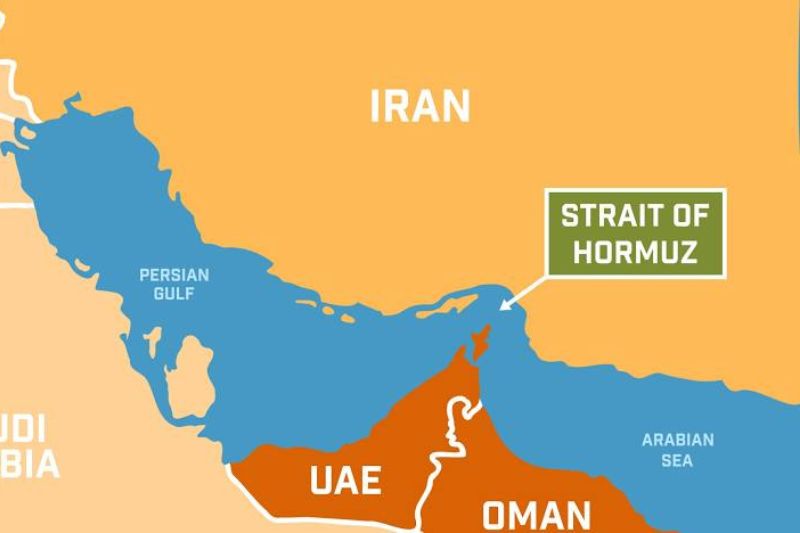
The Strait of Hormuz is a narrow waterway connecting the Persian Gulf with the Gulf of Oman, which then opens into the Arabian Sea.
Geographically, the strait lies between:
- Iran to the north
- Oman to the south, specifically the Musandam Peninsula
At its narrowest point, the strait is around 33 kilometres wide, while the shipping lanes used by oil tankers are only about 3 kilometres wide in each direction.
Despite its small size, it is one of the most important global maritime chokepoints.
Nearly 20% of the world’s oil supply passes through this route every day, making it critical for global energy markets.
Countries heavily dependent on this shipping route include:
- Saudi Arabia
- Iraq
- Kuwait
- United Arab Emirates
- Qatar
Because so much energy passes through this narrow corridor, even small disruptions can quickly affect oil prices and global shipping.
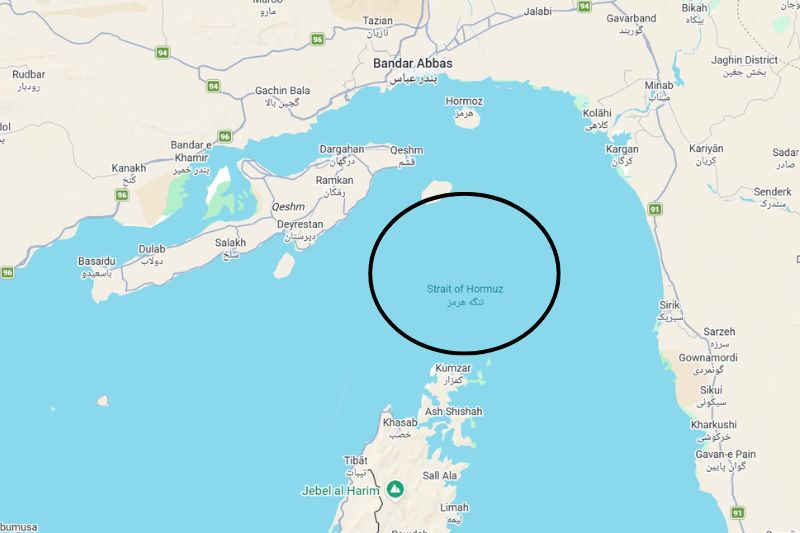
Strait of Hormuz Map
The Strait of Hormuz sits between Iran and Oman, acting as the only sea passage from the Persian Gulf to the open ocean.
On the map, the strait forms a narrow gateway linking the Persian Gulf with the Gulf of Oman and the Arabian Sea.
Who Controls the Strait of Hormuz?
The Strait of Hormuz is considered an international waterway, which means no single country fully owns or controls it.
However, the surrounding waters fall within the territorial zones of Iran and Oman.
International maritime law allows ships from all countries to pass through the strait under the principle of freedom of navigation.
Even so, Iran has significant strategic influence because of its long coastline along the northern side of the strait.
The country maintains a strong naval presence in the region through the Islamic Revolutionary Guard Corps Navy, which regularly patrols nearby waters.
Why the Strait of Hormuz Is So Important
The global importance of the Strait of Hormuz comes from its role as the main export route for oil and liquefied natural gas produced in the Gulf region.
Every day, millions of barrels of crude oil travel through the strait toward major energy-importing economies such as:
- China
- India
- Japan
- South Korea
Any disruption to this route could immediately affect global fuel prices, shipping costs, and economic stability.
Global Military Presence in the Region
Because of its strategic value, several international naval forces operate around the Strait of Hormuz.
The United States Navy regularly patrols the region along with allied forces from countries such as the United Kingdom and France.
These patrols aim to ensure safe passage for commercial ships and maintain stability along one of the world’s most critical trade routes.
Why the Strait of Hormuz Frequently Appears in Global News
The Strait of Hormuz regularly becomes a headline topic whenever geopolitical tensions rise in the Middle East.
Because such a large share of global oil flows through this narrow waterway, any threat to shipping can quickly trigger market volatility and global economic concerns.
For this reason, the Strait of Hormuz remains not just a geographic location but a vital lifeline for the world’s energy supply and international trade.
FAQs
Can Iran close the Strait of Hormuz?
The Strait of Hormuz is considered an international shipping route, meaning no country legally owns it. However, Iran has significant military presence along the northern coast and could potentially disrupt shipping during conflicts. Any attempt to close the strait would likely trigger international military and economic responses because of its importance to global energy supplies.
Why is the Strait of Hormuz important for global oil supply?
Nearly 20% of the world’s oil exports pass through the Strait of Hormuz every day. Major oil-producing countries such as Saudi Arabia, Iraq, Kuwait, and the United Arab Emirates rely on this route to export energy to global markets. Any disruption can quickly affect fuel prices and international trade.
Which countries depend on the Strait of Hormuz?
Many Gulf nations export oil and gas through the Strait of Hormuz, while major energy-importing countries such as China, India, Japan, and South Korea rely heavily on shipments passing through the waterway.
